EU warships to seize tankers - the shadow fleet is now a target
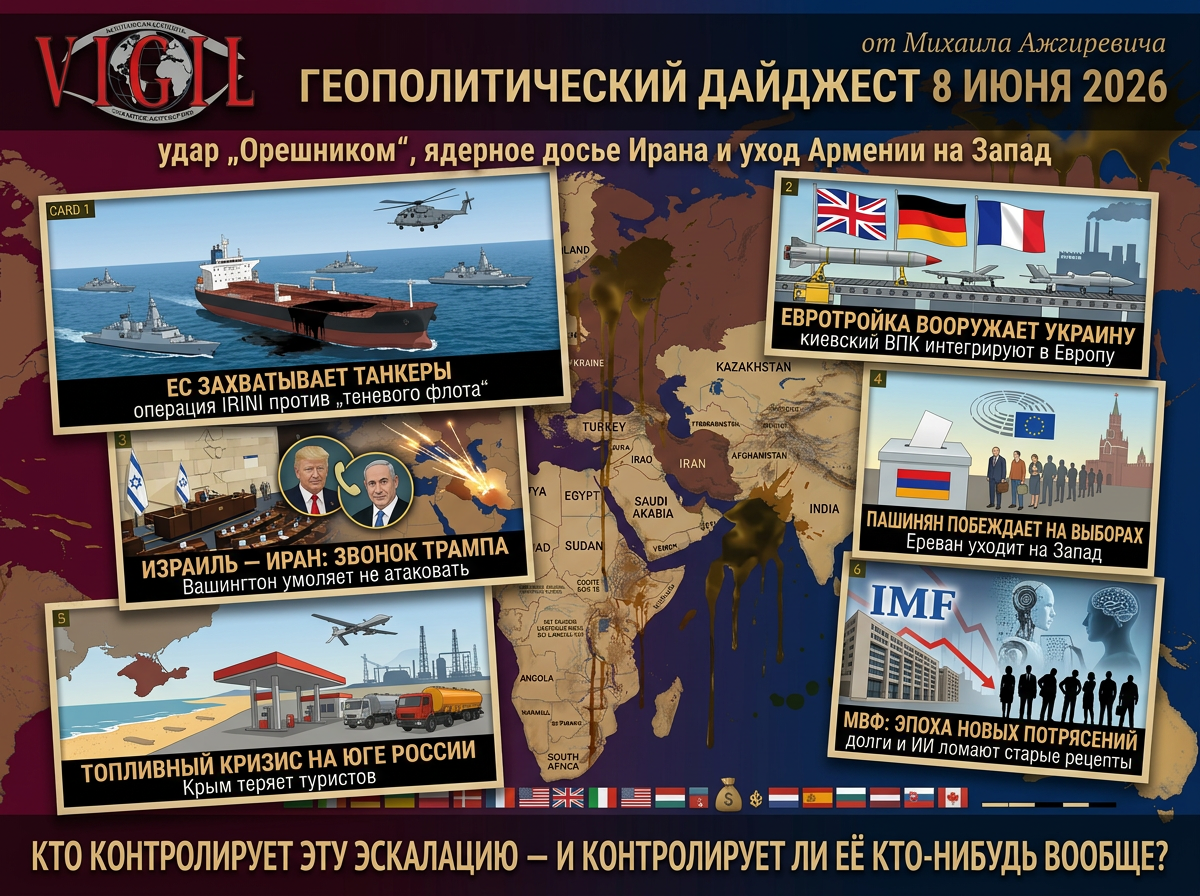
EU foreign policy chief Kaja Kallas announced that Operation IRINI in the Mediterranean has been granted new rules of engagement, allowing European warships to intercept and detain tankers suspected of carrying Russian oil. Originally designed to block arms shipments to Libya, IRINI has been quietly repurposed into a naval enforcement tool for energy sanctions. Kallas rewrites the rules in the Mediterranean - Russia will rewrite its shipping routes in response.
The European trio arms Ukraine - and integrates its defence industry
Britain, France and Germany announced after their London summit the production of long-range weapons and air defence systems for Ukraine, with a commitment to formally integrate Ukraine's defence sector into Europe's military-industrial base. Notably, every single British nuclear submarine is currently out of service for maintenance, with none expected to return for several years. London is producing weapons for someone else's war while its own nuclear fleet sits in dry dock - a curious set of priorities.
Israel promises to retaliate against Iran - Trump begs it not to
Iran struck back after Israel bombed Beirut, Israel vowed to respond, and Trump called Netanyahu personally: "We were days away from finalising the Iran deal - and then this happens." Israel agreed to halt strikes on Iran at Washington's request, but reserves the right to continue attacking Lebanon - a position that crosses Tehran's red line almost by definition. Trump wanted a deal by Wednesday. He got a war by Sunday. The Middle East doesn't clear its calendar in advance.
Pashinyan wins in Armenia - Moscow registers its "concern"
Pashinyan's Civil Contract party is taking 57% according to initial results, with the opposition well behind. The Kremlin reacted with unusual sharpness, citing violations and foreign interference - the language of a power that was not invited to supervise the outcome. Armenia has made its European choice, and made it at the ballot box. The result is "arranged" - Russia simply wasn't at the table this time.
Fuel crisis hits southern Russia - Crimea loses its tourists
Russia's Energy Ministry acknowledged "temporary difficulties" with fuel supplies in southern regions, attributing them to increased Ukrainian drone strikes on energy infrastructure. Crimea is paying the price: hotel bookings collapsed 31%, Sevastopol lost 40%, and for every two new reservations there are ten cancellations. The war has reached the holiday season - the front line now runs through the tourist booking desk.
IMF chief warns the world has run out of crisis tools
IMF Managing Director Kristalina Georgieva stated that the global economy has exhausted its standard toolkit - fiscal stimulus and rate cuts - due to record levels of sovereign debt, while AI risks repeating the worst outcomes of globalisation by displacing up to 60% of jobs in advanced economies. The Fund acknowledges it underestimated the social damage of globalisation - a modest admission, roughly twenty years late. The IMF has discovered that globalisation impoverished entire communities. A pity it didn't notice in 2005.
Final question: if the EU is seizing tankers, Trump is begging Israel to stop, Russia's fuel crisis has reached the beach resorts, and the IMF admits it has no tools left to handle the next shock - is anyone actually in control of what happens next?
 VK
VK YouT
YouT RuTube
.png)
.png)

.png)
.png)